General Exceptions in Torts


GENERAL EXCEPTIONS

(JUSTIFICATION OF TORTS)

We have understood, what tort is and what are its elements. Now, we come to its general exceptions, that is, the grounds on which a person committing a wrongful act is absolved from his liability to make good or compensate for the loss caused to the other. These are important because when one complains of a wrongful act, the other may deny the commission of the act or plead that his case his covered under exceptions and thus cannot be held liable. They are as follows –


1. Leave & License – Volenti non fit injuria

Legally nothing is an injury to which a person consents. In other words, where the sufferer is willing, no injury is done. A man cannot complain of harm to the chances of which he has exposed himself with knowledge and of his free will. The application of the maxim is not dependent upon any valid contract but upon the competence of the decision making capacity of the person at the time the consent was given.

A simple illustration of this defence is the consent that a sportsperson impliedly gives to sustain an injury during the game play so long it is played fairly. So, a cricket fielder sustaining injury while trying to catch the ball is the result of the risk he understood right at the onset of the game. And, as a result, the batman hitting the ball is not liable for the same.

But where, in a football game, a player’s foul play injures another and causes injury such as fracture, the first player will be liable for tort, as the consent of the injured player was limited to fair play and not extend to foul play or reckless disregard of player’s safety.

It is worth noting that this consent need not be taken down in writing, it which case it would be contractual. But the consent is implied from the actions of the person. Now, to understand the extent of consent, one need not go into the nitty-gritty of the law. But the test of common knowledge and experience is sufficient. So where, a person challenged an old man to fight and gave a severe blow to his eye, it cannot be said that the old man had given consent to such an injury.

Similarly, if there is a statutory duty (duty laid down by statute or legislation), the above maxim will have no application in case of breach of the same.

Also, the maxim does not apply where plaintiff has under an exigency caused by defendant’s wrongful misconduct, consciously and deliberately faced a risk, even of death, to rescue another from imminent danger of personal injury or death, whether the person endangered is one to whom he owes a duty of protection, as a member of his family, or is a mere stranger to whom he owes no such specific duty. The rescuer will not be deprived of his remedy merely because the risk which he runs is not the same as that run by the person whom he rescues. But where there is no need to take any risk, the person suffering the harm cannot recover damages.

2. Necessity

Necessity knows no law. An act which must necessarily be done does not entail liability.

A necessity can be Public Necessity which is based on maxim – salus populi suprema lex, that is welfare of the people is the supreme law. Examples of public necessity are pulling down of houses or cutting down of trees to prevent spreading of fire, Goods thrown overboard to save the ship or its passengers.

It is only in cases of existing, immediate and over-whelming public necessity that any such right exists. This defence is not available to a defendant whose negligence has created or contributed to the necessity.

Private necessity may also give rise to a defence of necessity.

Third group of cases are concerned with action taken as a matter of necessity to assist another person without his consent. Say, for example, A is walking on the road, when a car is about to hit him. B, seeing this, drags A towards side and rescues him from the car collision, but in doing so tears A’s shirt. Now, although B’s action has damaged A’s shirt but B is not liable to compensate A for the shirt, as his action was necessitated by the on-coming car. Similarly, medical treatment of an unconscious person even without his consent gives rise to no liability as same is under compelling circumstances.


3. Inevitable Accident

An “Inevitable Accident” or “unavoidable accident” is that which could not possibly be prevented by the exercise of ordinary care, caution and skill. It is based on rule of prudence that a person must guard against reasonable probabilities but they are not bound to guard against remote or fantastic possibilities. The term “accident” presupposes their origin in whole or part in human agency.

To understand, one can take a simple illustration. Say, two dogs belonging to two individuals are engaged in fighting when one of them uses a stick to separate them and accidentally hits the other individual causing him severe injury. The first individual, since could not have foreseen such a casualty, cannot be held liable towards the second.

Similarly, when a person A fires a bullet which hits a series of object and then ultimately injures a person B standing altogether in a different location, A may not be held liable. But it will be a question of fact whether A employed necessary care and caution which the situation demanded. So, if you shoot an arrow on the apple placed on someone’s head, be ready to be held accountable, as the running the risk amounts to recklessness and is well foreseen.


http://www.adhivaktalawcafe.com 

4. Act of God or vis major

Act of God is similar to inevitable accidents the only difference id that the act of God are those that are occasioned by the elementary forces of Nature unconnected with the agency of man.

Act of God is defined as such a direct violent, sudden and irresistible act of nature as could not, by any amount of ability, have been foreseen, or if foreseen, could not by any amount of Human care and skill have been resisted. For example, earthquake, storm, lightening, extraordinary rainfall, extraordinary high tide.

It is necessary that the phenomenon should be extraordinary. So if, a roof brick falls on a passerby’s head in ordinary rains of the region, this defence will not be available to the occupier of the house who has neglected his duty to keep up such repairs. Similarly, when a hotel room on a beach resort is flooded with water in ordinary tide, this defence is unavailable to the Hotel owner as the risk is foreseeable and the cause of damage is ordinary.

It is worth noting that it is not necessary that the natural phenomenon should be unique or occur for the first time. But it must be extraordinary regard being held to the general climatic and natural conditions of the place.


5. Plaintiff himself a wrong doer

Where the person seeking remedy under tort is himself the wrong doer, the defendant (person against whom legal action has been initiated) may put plaintiff’s wrong doing as defence. For example, A is driving his car negligently and thereby hits B who was carrying a briefcase. In the collision, B is startled and drops his case which breaks A’s car’s headlight. Now, since A is himself at fault, he cannot claim compensation from B for the said broken light.

This defence may be a total defence or a proportionate reduction in damages depending upon the facts of the case. But it must be understood that the plaintiff is not denied compensation unless some unlawful act or conduct on his own part is connected with the harm suffered by him as a part of the same transaction.

Take, for example, A trespasses B’s house by climbing his wall. In doing so, A’s trousers get torned. B will not be held liable for A’ trousers. But if B has placed spring guns in his gardens without notice, and the same fires injuring A, B will be held liable for the said injury. Nonetheless, B may also sue A for trespass.


6. Act of State

We already know that Law presupposes State and State is the machinery for Justice, that the law originates from the State’s desire and standard of Justice. Nonetheless, an act of State by itself cannot result in Injury.

Though with growth of Human Rights, the idea of State has undergone a lot of change and even the State does not have unlimited authority over its citizens. Particularly, in modern constitutional democracies, Constitutional Law sets out certain limitations over State’s authority. There is an arena of civil liberties that cannot be encroached upon by the State or its agencies. These are, what is referred to in Indian Constitution as, Fundamental Rights. These are basic rights necessary for human development and cannot be alienated or parted with.

But despite fundamental rights, there is a plethora of region where individual rights must give way to the state action derived from larger interest of the society. So, if in a riot, a Police Officer uses firearm well within his authority and somehow ends up injuring an innocent or his chattels, the State will come in to protect his wrong doing. Similarly, a Judge presiding over in a judicial proceedings cannot commit any wrong. Their actions are protected under law by way of immunity.

It is worth noting that presently State engages in a variety of activities which are essentially business. And the State or its corporations engaged in such business activities cannot claim this defence because while acting as such, they are acting similar to an ordinary citizen. It is only for the sovereign acts of state (such as Law and order, Justice administration, War) that this defence can be used.


7. Private Defence

Every person has a right to defend his own person, property, or possession against an unlawful harm. This may even be done for a wife or husband, or parent or child, a master or servant, and even for strangers in need out of empathy. But the act must be one of defence and not an offence in itself. The means adopted to protect oneself or one’s property must be reasonable i.e. proportionate to the threat and that the danger must be real and imminent.


8. Trifle Act or act causing slight harm

This defence is based on maxim ‘de minimis non curat lex’, that is, law does not take in account of trifles. Nothing is a wrong which a person of ordinary sense and temper would not complain. This has no application where there is injury to a legal right.

p { margin-bottom: 0.25cm; line-height: 115%; background: transparent }
General Elements in Tort


GENERAL ELEMENTS IN TORT

There are two basic elements in Tort, Namely Act or Physical Element and Mental Element.

Physical Element

Act refers to movement of body, living or dead, or a part of it, but not merely a thought, intention or a dream. Act, in common parlance, denotes activity or action. But legally, Act can be both positive as well as negative. That is, in law, Act includes omission. One maysaythat even when one chooses not to act, he infact acts the other way round or the act is one of rest or lethargy. Acts and omissions may be understood as events under Human control as against Natural events such as rising of the Sun, Earthquake etc.

Any act cannot amount to tort unless it is done or in negative sense, where it was a duty, the same is omitted. A mere thought or intention or ill-will towards someone without any action in furtherance of it cannot amount to Civil Wrong. Though mere sharing of such idea or thought, in certain cases,may be sufficient to be held liable. In such cases, the sharing is sufficient act.

It is worth noting that although act includes omission but the law generally does not impose liability for omission. But where the law lays down a duty of action, its omission is accountable under the law.

Take, for example, a person “A” is drowning in a Pool. A person “B: standing nereby and watching the incident and despite having the ability to save the first person, omits to do so. B incurs no liability unless he was appointed as a Life-guard, in which case it would have been his duty to try and save the person from drowning.

Futher, an act may be voluntary or involuntary. Voluntary means originating out of volition i.e. something one chooses to do or not do, over which the person has control although all its results may not be foreseen.

Involuntary acts are those where the actor lacks the power to control his actions and involuntary omissions are those where the actor’s lack of power to control his actions renders him unable to do the act required. An Involuntary act does not give rise to any liability.

Mental Element

To bring an action under Tort, the act must be voluntary coupled with a mental element such as Malice, Intention, Negligence or Motive. The only exceptions are Strict and Absolute Liability, to which we shall come to at a later stage. First, we shall see different mental elements.

  1. Malice

    Malice means ill-will. In law, it is used in two different senses. Firstly, Intentional wrong or Malice in Law. It refers to an act done wrongfully, and without reasonable and probable censure, and not, as in comman parlance, an act dictated by angry feeling or vindictive motive. It is in its nature implied i.e. law infers it from circumstances. Secondly, Malice may refer to improper motive or Malice in Fact.

  2. Intention

    Intention is an internal fact. It is what goes in the mind of the doer and no direct evidence of the same is available. In an intentional act, the doer has both the knowledge and desire of the consequences.

  3. Negligence

    An act is negligent when the consequences are not adverted to though a reasonable person would have foreseen them. For example, Driving a car fast on a busy lane. Though the driver may not intend causing harm to anyone, but a reasonable person can foresee such a catastrophe.

  4. Recklessness or Gross Negligence

    When the consequences are adverted to though not desired and there is indifference towards them or willingness to run the risk, it amounts to recklessness. It is often equated with Intention because the negligence is so gross, it is deemed that the person intended the very act or consequence.

  5. Motive

    Motive is the ulterior object or purpose of doing an act. It differs from Intention which is immediate. It is the motive that gives rise to Intention and not the other way round. Motive is concrete Intention is abstract. Motive is driving force behind all actions.

    Generally, Motive is irrelevant. A person may cause injury to another despite having best of motives. Also, an an action may be perfectly legal despite bad motive. The law has greater regard for the act itself rather than its motive.

Illustration:

If a man throws a stone at a woman, his trespass to her person is intentional; that he threw it because she had jilted him would be motive and immaterial as such. If he did not throw the stone for purpose of hitting her but ought to have foreseen that it was likely that the stone could hit her, his act would be un-intentional but nevertheless negligent. If the stone hit her solely because it rebounded off a tree at which it he had thrown it his conduct would be voluntary and hit accidental. But if, while he was holding the stone in his hand, a third party seized his arm and by twisting it compelled him to release his hold on it, whereupon it fell on the woman, his conduct would be involuntary and could never give rise to liability on his part.

CLASSIFICATION OF TORTS

All torts can be classified into three broad categories:

(1) Malfeasance

These are unlawful acts and are actionable per se, that is, without proof of negligence;

(2) Misfeasance

Misfeasance is improper way of doing the act which cause damage. This happens when one’s action is the result of

negligence;

(3) Non-feasance

Non-feasance is wrong of omission. A suit does not lie for them unless the law imposes a duty to act.

p { margin-bottom: 0.25cm; line-height: 115%; background: transparent }

Introduction to Law of Torts


LAW OF TORTS

The word “Tort” is derived from Latin word “Tortum” meaning “Wrong”. It’s meaning, for legal purpose, is a legal wrong or injury.


Need of Law of Torts

Law of torts creates a balance between individual’s freedom of action and society’s interest of security. The law provides for freedom to the extent it does not damage social order or causes injury to the people around.

The law of torts does so by providing for pecuniary compensation for injuries to person and property. The compensation is recoverable by the process of law. This compensation shifts the loss from the ‘victim’ to the person who caused it.

Tort differs from crime as it is redressed by compensation or damages, while crimes are punished by way of imprisonment or fine or other means. At times, the same wrong may be a tort as well as a crime concurrently, for which both actions may be initiated.

Tort also differs from breach of contract. The law of contract deals with rights and duties arising out of agreement of parties. While, law of torts deal with rights created by operation of law and duties imposed on persons in general.


DEFINITION

Salmond has defined Tort as a civil wrong for which remedy is common law action for unliquidated damages and which is not exclusively breach of Contract, breach of Trust or other mere equitable obligations.

Althoughthe above definition may appear technical, but the main ingredients of tort are –

1. Civil Wrong

Tortis a civil wrong in the senseit is different from criminal wrong or Crime, for which Criminal prosecution may be launchedand the chief idea isto punish the wrong doer by way of imprisonment orfine. In civil wrong, there is sanction in form of damages orcompensation, restitution, injunction etc.

Civil Wrong presupposes Legal Right. Without Right, there can be no wrong. This wrong can beseen as infringement of Right or breach of legal duty. Anaction for tortmaybe brought by any person who’s right has been infringed or in whose favour the duty existed has been breached.

In this reference followingtwo maxims must be considered –

i. Injuria sine damno i.e.injury without damage

Injury means legal wrong, whereas damage means loss. This maxim speaks of cases where a person’s legal right has been infringed although no loss has occurred to him. For example, In a case where a person was the deniedhis right to vote but the candidate he intended to vote won the electionnonetheless, it was held that although there was no loss but the plaintiff was legally wronged and as such could bring an action in tort

ii. Damnum sine injuria i.e.damage without injury

This maxim speaks of cases where a person has incurred loss, but none of his right has been infringed. For example,where a person started a new school in proximityof old one, the old schoolloses many students and thus sufferdamage and monetary loss. But the old school cannot maintain action in tortbecause there is no legal wrong. No legal right has been infringed norany duty breached.


2. Unliquidated Damages

Damages refer to measure of harm. Since, under tort law, the the measure of injury cannot be predefined, hence the damages are in this very nature unliquidated i.e. not pre-ascertained. Here, a reference may be made to contractual liability where parties may make a genuine pre-estimate of loss in case of its breach. But in tort, the damages are determinable only after the incident actually occurs.

p { margin-bottom: 0.25cm; line-height: 115%; background: transparent }
RIGHTS & DUTIES

 RIGHTS & DUTIES

Before understanding the concept of Rights and Duties, we need to know what connotes “Wrong”. The term “Wrong” is of common parlance and one often uses phrases such as I was wrong or the answer is wrong i.e. in sense of incorrectness of response. Largely, the term wrong is used in social form. In its legal sense, “Wrong” means contrary to Justice or Rule of right. It is also termed as legal injury i.e. An act classifies as “Wrong” (in legal parlance) if it results in Injury which the loss seeks to protect. If the Law does not recognise such injury or prescribe redress, the act is not a legal wrong, although it may be a moral or natural wrong.

Asense of wrong is one of emotional wrong,say for example, a boy proposes a girl who simply rejectsthe same. The boy mayfeel wronged,but the same does not qualifyto be a legal one. On the contrary the proposal itself under certain circumstances qualify as voyeurism, which is a legal wrong.


Duty

Duty is anobligatory act. It is an act the opposite of which would be wrong. Breach of duty is a commission of wrong, or vice versa.A Duty is legal because it is legally recognised not necessarily because it is legally enforced or sanctioned.


Right

A Right is an interest recognised and protected by rule of right or law. It is an interest respect, for which is a duty, and the disregard of which is a wrong. If an act is right or just, it is so because and inso far as it promotes some form of Human interest. If any act is wrong or unjust,it is because the interest of men areprejudicially affected by it.

The above statement is very much relevant to legislative action. Justice is an abstract concept. The scale used to measure it is Law. So while drafting law/legislation, legislatureis governed by the thought of Human interest. Here again, we can see althoughright is adjudgedby Law, the source of Law itself is Right.

Since the interestsof men conflict with each other, and it is impossible for all to receive rightful recognition, Rule of Justice selectssome for protection and others are rejected. The interestswhich thusreceive recognition and protection from the rules of right are called Rights. Rights and Duties are necessarily co-relative. A person’s right is necessarily someone’s duty.


Elements of legal right

Alegal right has following five basic elements –

  1. Owner of right – Person in whom the right is vested.

  2. Subject of Duty – Person or persons against whom right avails and upon whom the co-relative duty lies.

  3. Content of Right – Act or omission which is obligatory on person.

  4. Object or Subject matter of Right – Thing to which act or omission relates.

  5. Title – Fact or event by the operation of which right became vested in its owner.

To understand this, take a simple example where A buys a piece of land from B. Here,A is the owner of right. Thesubject of duty ispersons in general or world at large. The content of right is non-interference with A’sexclusive use of land. Subject-matter of right isthe saidpiece of land, and Title is the conveyance or the sale deed.


Thus every right involves three fold relation with the owner –

  1. It is right against some person or persons

  2. It is right to some act or omission of such person or persons

  3. It is right over or to something to which that act or omission relates


Legal Right in wider sense of the term

In wider and laxersense, term “Right”includesany legally recognised interest whether it correspondsto a legal duty or not. In this generic sense,a legal right may be defined as any advantage or benefit which is in any manner conferred upon a person by rule of law. In this manner, Right can be classified as

  1. Right (in strict sense)

  2. Liberty

  3. Power

  4. Immunity


Liberty

Liberties are space provided by Law for free action, leaving the person to act according to his own conscience. They are the things which I may do without being restrained by the law. Liberties are the benefits which I derive from the the absence of legal duties imposed upon myself.

AlthoughRight and Liberty may appear one, but take for example, Ais owner of land. He has a right to exclusive use i.e.no one else can interfere with his possession and the sameis the duty of Public at large. But it is his liberty to use or not. So, though his user rightandliberty coincide, they are essentially different.


Power

Power may be defined as the ability conferred upon a person, by the law to determine by his own will directed to that end and the rights, duties, liabilities or other legal relations either of himself or other persons. Power resembles Liberties and differ from Rights in strict sense, in so much as they have no duties corresponding to them. Adebtis not something as a right of action for its recovery. Formeris a right in strict sense with corresponding duty of debtorto pay. Latter is legal power corresponding to liability of debtor.

Power is eitherability to determine the legal relations of other persons i.e. authority or ability to determine one’s own i.e capacity. In other words, Authority is power over others and Capacity is power over self.


Immunity

Immunity connotes exemption. It means an examination from enforcement of duty by the Courtor State, thusdisabling the person who otherwise would have a legal right.


Co-relatives

Right – Duty

Liberty – No Right

Power – Liability

Immunity – Disability


Right & Rights

Hear, a brief mention may be made of Right and Rights. Rights are one’sindividual interests enumeratedin law, while Right connotescollection of all individual rights accrued to all persons. It is in this nature that we have rightsbut what the Lawupholdsis “Right” i.e.alright collectively at the same time.

To add to this discussion, one may refer to Human Rights, those that are fundamental and germaneto human life and cannot be alienated or foresaken.Indian constitution also enumerates them as Fundamental Rights. But the whole idea is of Human Right or Justice which we may recall is in its very nature abstract. Rightare its limbs that we mayfeel or touch and define, but to define the whole is a task yet to be achieved.

p { margin-bottom: 0.25cm; line-height: 115%; background: transparent }
Law & State

 LAW AND STATE

http://www.adhivaktalawcafe.com 


Law presupposes State. State means an Independent Sovereign Political Unit. In this sense, Uttar Pradesh, Madhya Pradesh are states ans so is Union of India and United States of America. Without State, there can be no Law. Though there may exist rules of Conduct such as morality to govern day to day interactions, transactions and procedures. But without the existence of Political Unit (State) all these rules will only be directory in Nature, there being no Imperative enforcing the same. Such moral rules are imbibed in upbringing of the child and are followed throughout the life without much deviation but it is because of personal volition, and not out of compulsion. For such a group of people to become State, they must organize themselves into a Unit, comprising of a Sovereign Head and recognize his supremacy over the subjects.


Elements of State

State consists of following four constituents –

  1. Population

  2. Land

  3. Government

  4. Sovereignty


Population

Population means People or citizens of the State. State presupposes citizenry i.e. Persons belonging to the state. State does make a distinction of US & THEM. State and its Laws have general bias towards its own people while the outsiders (Non-citizens) are endowed with certain disabilities. Though Non-citizens may be conferred certain rights, but their extent is generally limited when compared to those of Citizens. Further there may be rules by which a Non-citizen may be taken up as a Citizen and Citizen be regarded as non-citizen (e.g. if he takes up citizenship of another State). That is to say, although the State makes a distinction, the compartments are not always water-tight.

Land

Land means portion of Earth Surface. Every State must have a definitive territory i.e. Territorial limits to which it may exercise its authority. Although at times, there may be boundary disputes and authority may not be effectively exercised in remote regions, but one must be able to locate the State on the Globe.

Government

Government represents that part of the population which is bestowedwith function of management of the affairs of the State. Its basic elements are

  • Legislature – one that makes the laws

  • Executive – one that enforces the laws

  • Judiciary – one that interprets the law

    Together, the three pillars form the government which look into the daily state affairs.

Sovereignity
Sovereignty is the idea of Supremacy over subjects. Austin has defined Sovereignty in terms – “If a determinatehuman superior, not in the habit of obedience to a like superior, receives habitualobedience from the bulk of a given society, that determinateHuman Superior is Sovereignin that society, and that society (including the superior)is a society political and independent.”

It is worth noting that the above definition was given in Monarchicaltimes, hencethe word Human superior is used. In modern democratic society,this human element need not be a physical human being like King orQueen, it can be Parliament, Constitution or even the People in general themselves under acommon name or identity.

Once a village society developsinto Political unit recognizinga village headman, similar to a Sovereign,and enforces its rules of conduct by virtue of power, aState is born.


LAW

Salmond has defined Law as the body of principles recognized and applied by the State in the administration of Justice.

Law, in common parlance, means rule. It signifies a rule of action, and is applied indiscriminately to all kindsof action, whether animate or inanimate, rational or irrational. It is in this sense terms such as Lawsof Physics etc are used. In thissense, Law may be classified as –

  1. Physical or Scientific Law

    These are general principles expressing the regularity and harmony observable in the activities and operations of the universe. e.g. Earth revolves around the Sun.

  2. Natural or Moral law

    It is the principles of natural right and wrong, the principles of Natural Justice. It is the reason (sense of right and wrong, just and unjust) by which the world is governed. Cicero has pointed out that there is indeed a true law, right reason, agreeing with nature, diffused among all men, unchanging, everlasting……… It is not allowable to alter this law, nor to derogate from it, nor can it be repealed.

  3. Imperative Law

    It means any rule of action imposed upon men by some authority which enforces obedience to it.

  4. Conventional Law

    By Conventional law is meant any rule or system of rules agreed upon by persons for the regulation of their conduct towards each other.

  5. Customary Law

    It is any rule of action which is actually observed by men – any rule which is the expression of some actual uniformity of voluntary action. Custom is a law only for those who observe it.

  6. Practical Law

    Law which consists of rules for the attainment of some practical end may be termed as Practical law. e.g. Law of Health, Law of Style etc.

  7. International Law

    International Law or the law of Nations consists of those rules which govern Sovereign States in their relations and conduct towards each other.

  8. Civil Law

    This is the State authored law and our primary subject when the term law is used in reference to Justice as administered by Courts and legal procedures.


Administration of Justice

The administration of Justice may be defined as the maintenance of right within a political community by means of the physical force of the State.

The instrument of coercion employed by any regulative system is called a Sanction, and any rule of right supported by such means is said to be sanctioned. A Sanction is not necessarily a punishment or penalty. To punish wrongdoers is a very effectual way of maintaining the right, but it is not the only way. We enforce the rule of right, not only by increasing the thief, but by depriving him of his plunder, and restoring to its true owner, and each of these applications of the physical force of the State is equally a sanction.

Law is logically subsequent to administration of Justice. Courts of Justice are essentially Courts of law, justice in this usage being merely another name for Law. The administration of justice is essentially the enforcement of the law. The laws are the commands laid by the State upon it subjects and the law courts are the organs through which these commands are enforced.

But the administration of justice is perfectly possible without law at all. There is perfect possibility of Tribunals where Justice is not administered according to predetermined principles of Law, but according to unfettered discretion of Judge, in which equity and good conscience and natural justice are excluded by no rigid and artificial rules. Such Courts are Court of Justice and not of Law. Despite the above possibility, Law is desirable for the sake of clarity and impartiality.

p { margin-bottom: 0.25cm; line-height: 115%; background: transparent }

बंद घरों में चोरी करने वाले 03 चोर गिरफ्तार, 25000 रु. का इनामी अभियुक्त सोनू उर्फ करन जाट

 बंद घरों में चोरी करने वाले 03 चोर गिरफ्तार, 25000 रु. का इनामी अभियुक्त सोनू उर्फ करन जाट भी गिरफ्तार, कब्जे से चोरी की सैंट्रो कार, सोने व चांदी के आभूषण, 11500 रु., 7 घड़ी व चोरी करने के औजार बरामद:-थाना सेक्टर-24 नोएडा


पुरानी कहावत है कि बुरे काम का अन्जाम बुरा ही होता है। यदि फिर भी कोई ना माने तो कर देखो।अलीगढ ज्वैलर्स के यहां हुई लूट में शामिल बदमाशो को @noidapolice पुलिस ने सिखाया सबक। अब शायद अपराध करने के काबिल भी नही छोडे।शानदार ।

 पुरानी कहावत है कि बुरे काम का अन्जाम बुरा ही होता है। यदि फिर भी कोई ना माने तो कर देखो।अलीगढ ज्वैलर्स के यहां हुई लूट में शामिल बदमाशो को @noidapolice पुलिस ने सिखाया सबक। अब शायद अपराध करने  के काबिल भी नही छोडे।शानदार ।

मुठभेड़ में घायल हुए बदमाशों ने अलीगढ़ में एक ज्वेलर्स की दुकान में लूट की थी । जोकि नोएडा में आकर छुप गए थे जिन्हें सेक्टर 39 नोएडा की पुलिस ने मुठभेड़ में गिरफ्तार किया। दोनों बदमाशों के पैरों में गोली लगी है। जिनका चिकित्सीय परीक्षण करने वाले डॉक्टर ने बताया की ऐसा भी हो सकता है कि अब ये आजीवन अपाहिज की जिंदगी जीये। तो मैं आप सभी लोगों से जो भी इस ब्लॉग को पढ़ रहे हैं यही प्रार्थना करता हूं कि कृपया कानून को का सम्मान करें ।बहुत-बहुत धन्यवाद

#CrackdownNoida थाना दादरी क्षेत्र में पुलिस व बदमाशों के बीच मुठभेड़ में 25 हजार रुपये का इनामी बदमाश

 #CrackdownNoida

थाना दादरी क्षेत्र में पुलिस व बदमाशों के बीच मुठभेड़ में 25 हजार रुपये का इनामी बदमाश अंकित गोली लगने से घायल व गिरफ्तार, कब्जे से चोरी की मोटरसाइकिल व अवैध शस्त्र बरामद।

@Uppolice

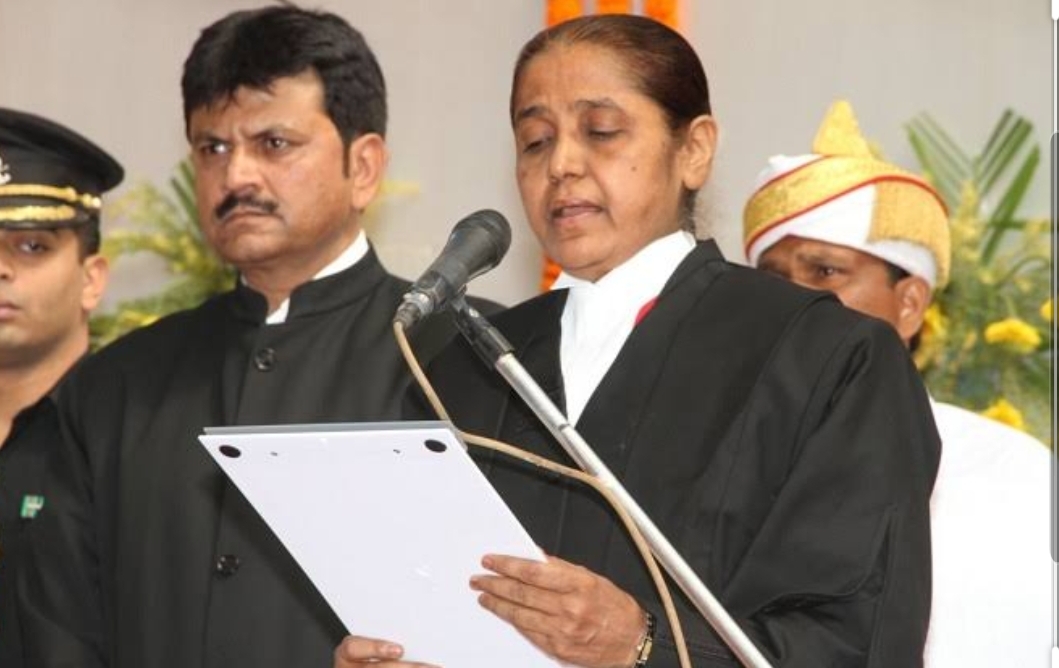
My family also victim of Judicial delay. #Justice_R_Bhanumathi

Justice R.Banumathi 

माननीय सुप्रीम कोर्ट की छठी महिला जज और सबसे बेहतरीन जजों में से एक जस्टिस आर भानुमति का सुप्रीम कोर्ट में आज आखिरी कार्य दिवस था । बार एसोसिएशन ऑफ़ सुप्रीम कोर्ट की तरफ से उनके लिए फेयरवेल पार्टी का आयोजन किया गया था । जिसमें जस्टिस आर. भानुमति ने कहा कि उनका जन्म तमिल नाडु के एक छोटे से गांव में हुआ था। 2 साल की उम्र में ही एक बस एक्सीडेंट में मैंने अपने पिता को खो दिया था। उनकी माताजी ने एक्सीडेंट क्लेम ट्रिब्यूनल में मुआवज़े के लिए केस फाइल किया था और कोर्ट ने डिक्री ( आदेश ) भी पारित कर दिया । लेकिन प्रक्रिया इतनी जटिल थी कि हम मुआवजा प्राप्त ही नहीं कर पाए। इस तरह हमारा परिवार खुद देरी से मिले न्याय का शिकार हो चुका है। जस्टिस आर. भानुमति ने अपने कार्यकाल में कई यादगार निर्णय दिए हैं । उन्होंने हमेशा ही नए अधिवक्ताओं को कठिन मेहनत करने और पढ़ाई पर ध्यान देने के लिए प्रोत्साहित किया । उन्होंने अपनी फेयरवेल स्पीच में यह भी कहा कि अगर उन्होंने कभी किसी अधिवक्ता की भावनाओं को ठेस पहुंचाई हो तो उन्हें माफ करें । 1988 में 33 साल की उम्र में तमिलनाडु प्रदेश की हायर ज्यूडिशरी सर्विसेज HJS की परीक्षा पास कर उनका चयन जिला एंव सत्र न्यायाधीश के पद पर हुआ और उसके बाद 2003 में उन्हें हाई कोर्ट में जस्टिस के रूप में प्रोन्नत किया गया तथा 13 अगस्त 2014 से वे सुप्रीम कोर्ट में जस्टिस के रूप में अपनी सेवाएँ दे रही थी। आपको भविष्य के लिए बहुत-बहुत शुभकामनाये। 

Design a site like this with WordPress.com
Get started